Flaming Potatoes, Magic Mirrors, and Mind-Reading AI: Inside the EmuLab Fair
December 11th, 2025
Amandine Verstegen
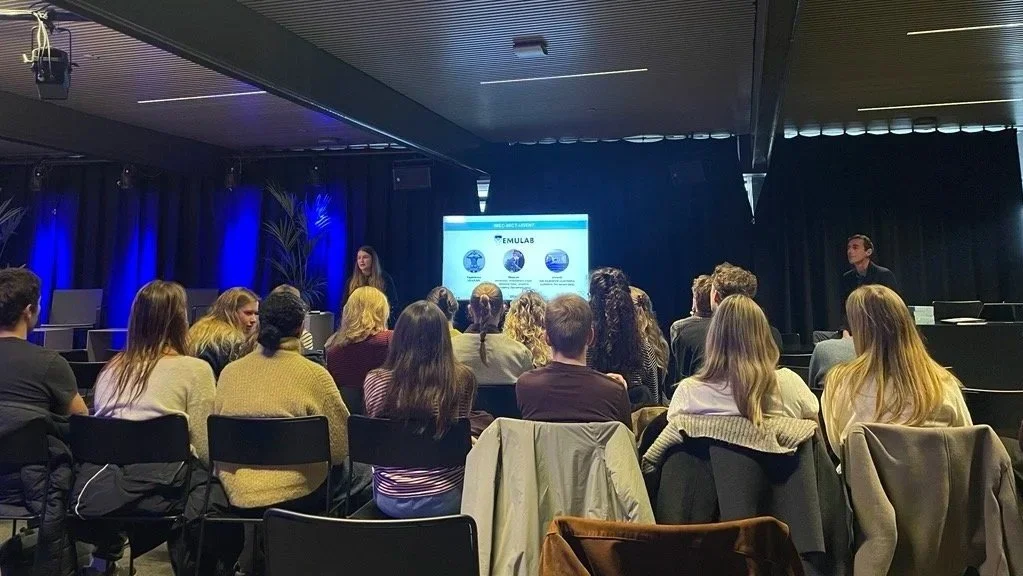
Last Wednesday, 140 Communication Science students visited our lab for a “Lab fair”.
The visit began with an introduction to EmuLab, after which the students explored five research booths at the mict labs in de Krook.
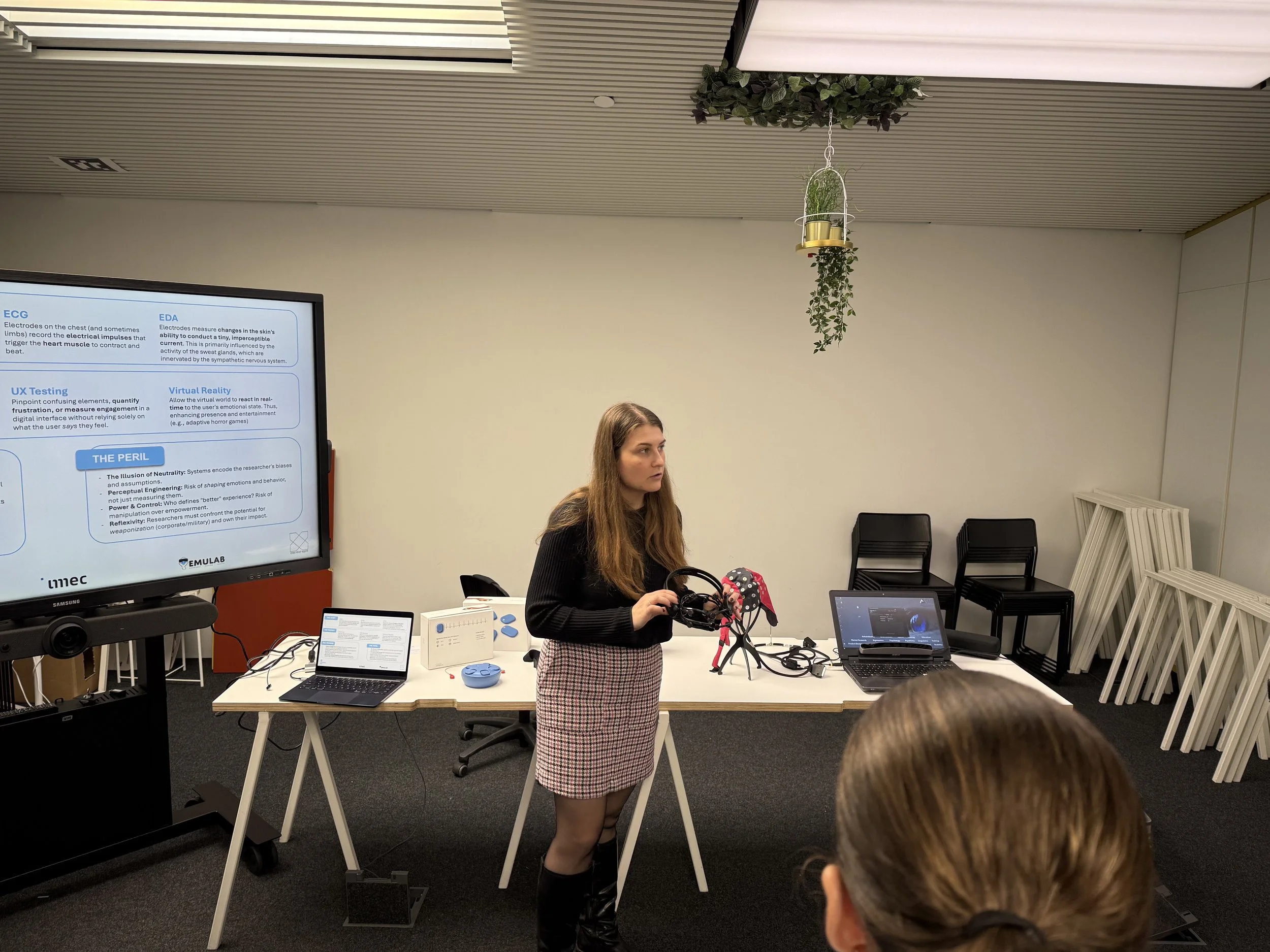
Aleksandra introduced the "How, Where, and Why" of biometric signals. She broke down the specific tools used in the lab: EEG to detect electrical signals from neurons in the brain, ECG to track heart muscle impulses, and EDA to measure changes in skin conductance driven by the sympathetic nervous system.
She explained how these signals apply to different contexts, such as UX testing- where we can quantify frustration without relying solely on what users say they feel - or VR, where an environment (like an adaptive horror game) can react to a user’s fear in real-time.
The core of her presentation weighed the "Promise" against the "Peril" of this sensor-driven methodology. While the signals from these sensors promise personalized systems that can adapt to a user's cognitive load - slowing down when stress is high or speeding up during boredom - she also warned of the risks. She highlighted the "illusion of neutrality," noting that systems often encode researcher biases, and discussed the ethical danger of "perceptual engineering," where technology might be used to manipulate or shape behavior rather than simply measure it.
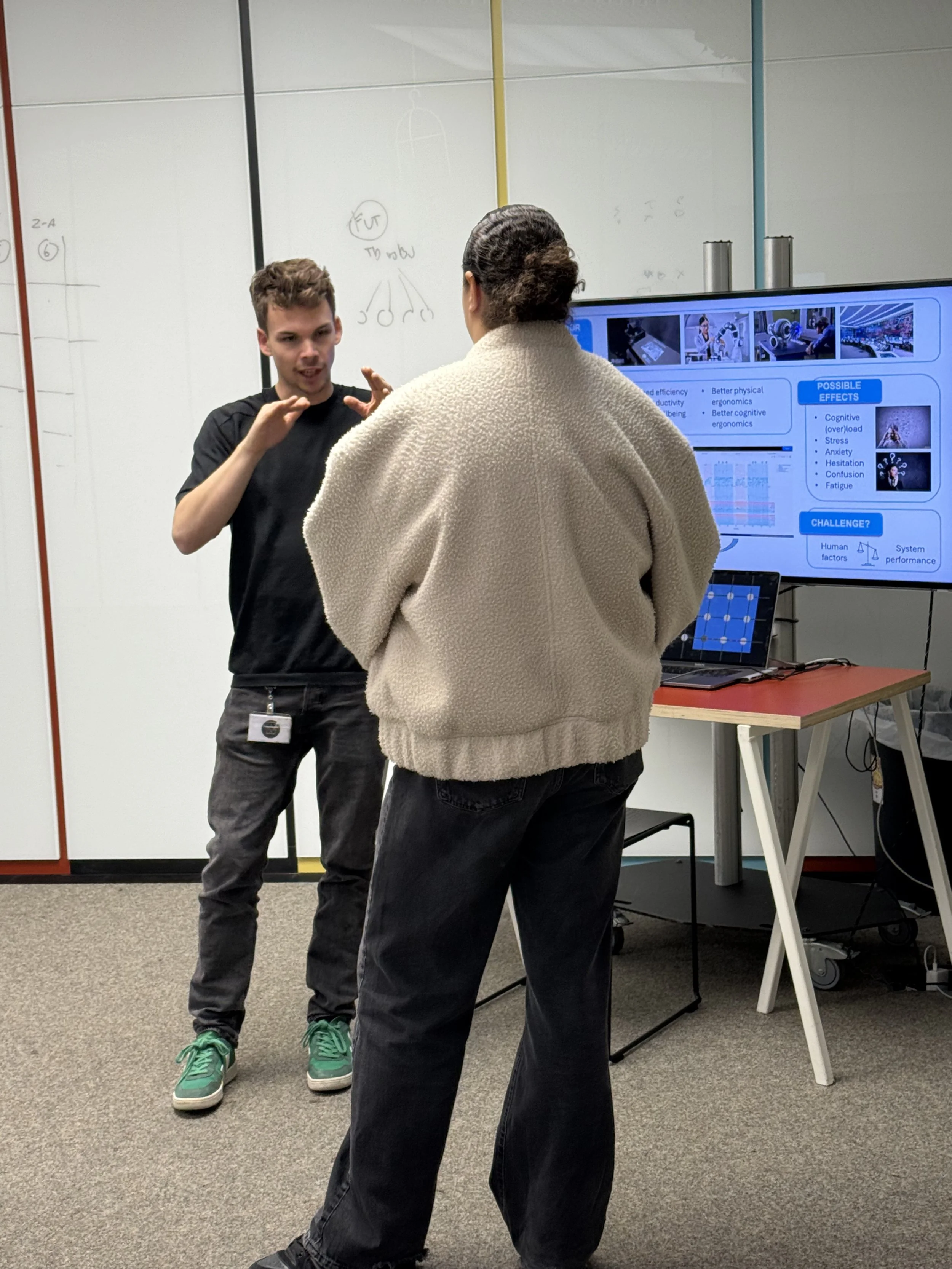
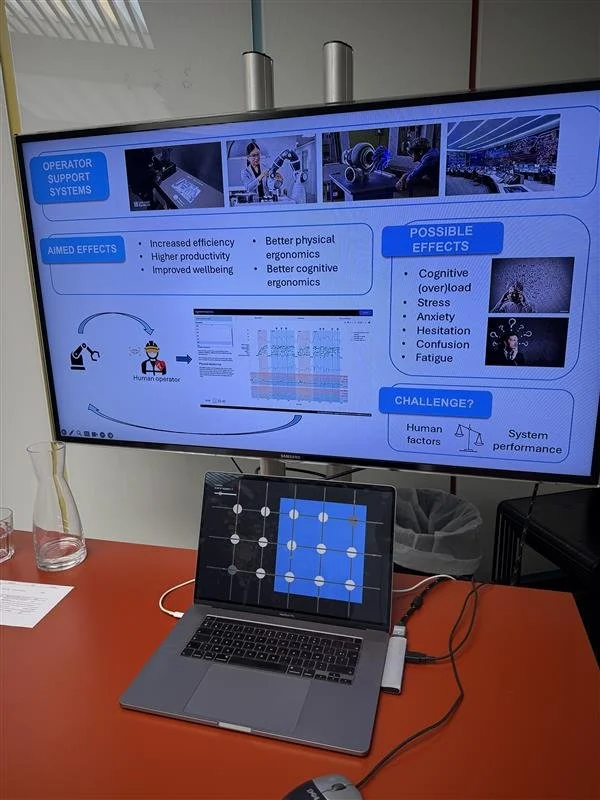
Jonas presented his research within the trajectory toward user-adaptive operator support systems - what we can measure, how to use that data, and how to design such adaptive systems.
He explained how these systems can support human factors such as stress and cognitive load to better support operators in industrial or complex environments.
He highlighted both the opportunities (higher efficiency, improved ergonomics, increased well-being) and the risks (overload, stress, confusion), emphasising the ongoing challenge of balancing human needs with system performance.
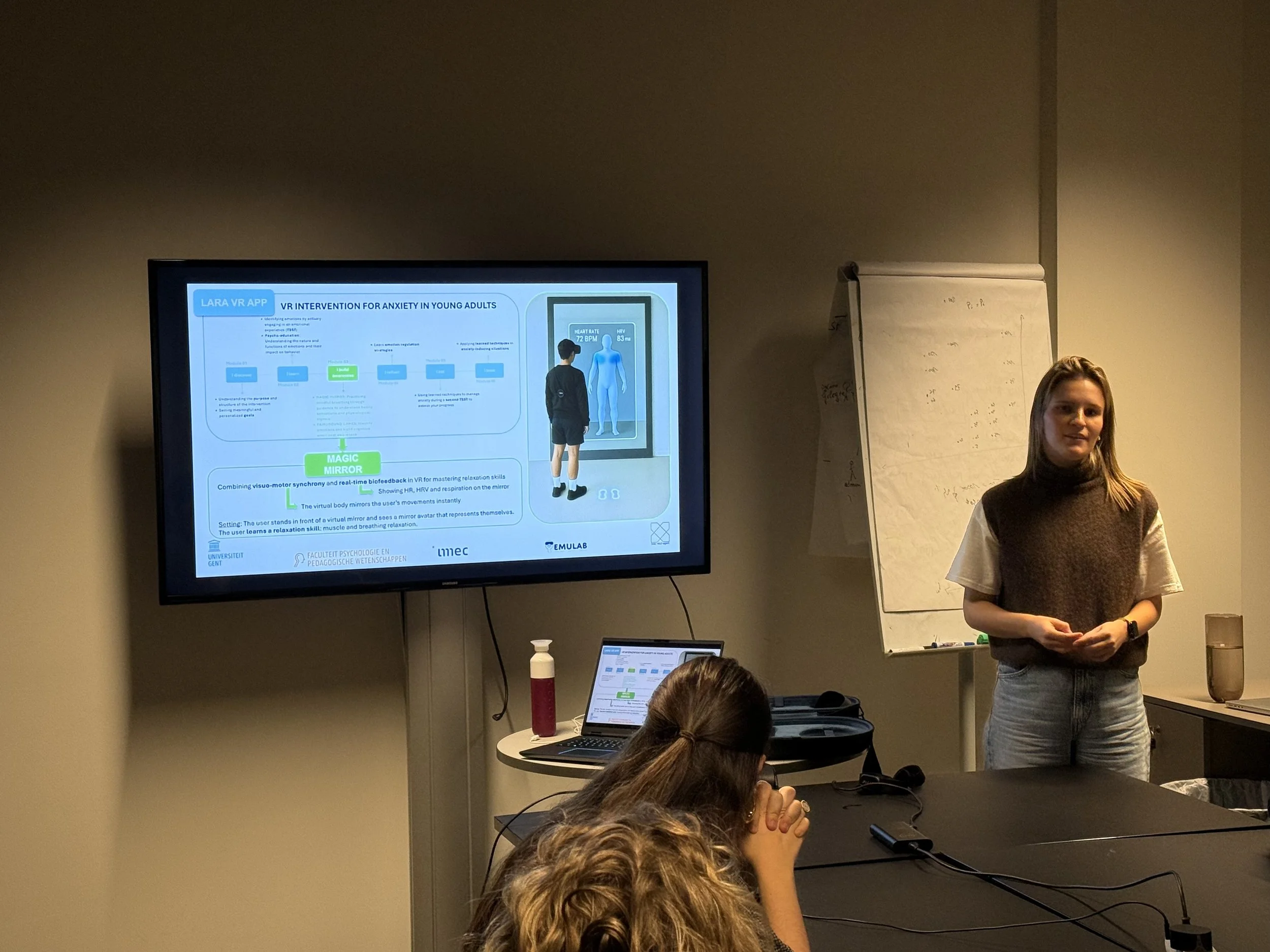
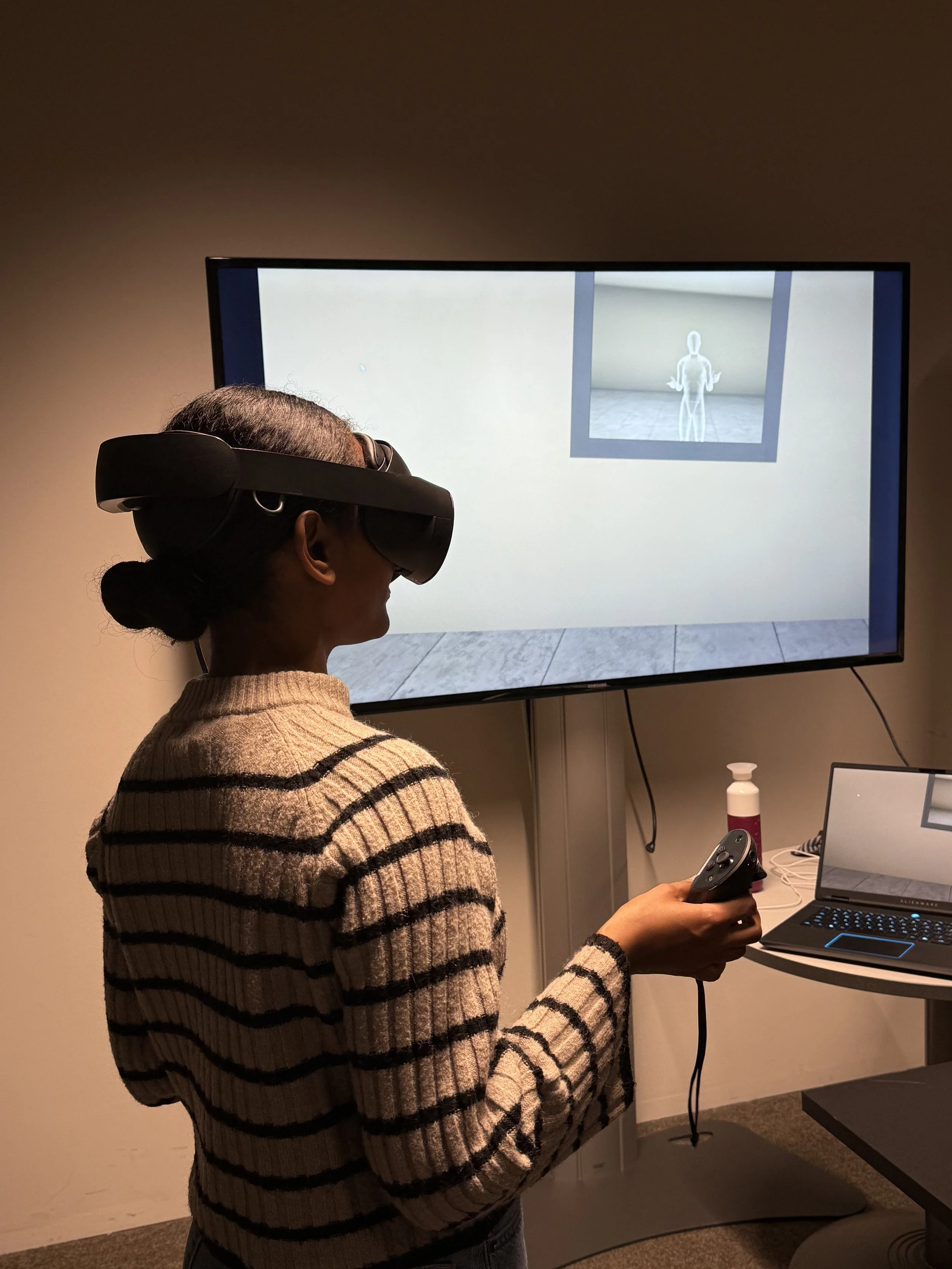
Gaël and Amandine demonstrated The Magic Mirror study, part of a VR intervention designed to reduce anxiety in young adults, developed as part of the project Emerging Adulthood: The Time of Your Life - Peter Prinzie, Bart Soenens, Khawla Ajana, Klaas Bombeke, Jelle Saldien.
In this Magic Mirror, users stand in front of a virtual mirror while learning muscle relaxation and breathing techniques. The study examines whether adding visuo-motor synchrony (the mirror avatar moves with the user) and real-time biofeedback (HR, HRV, and respiration) enhances users’ ability to master these relaxation skills.
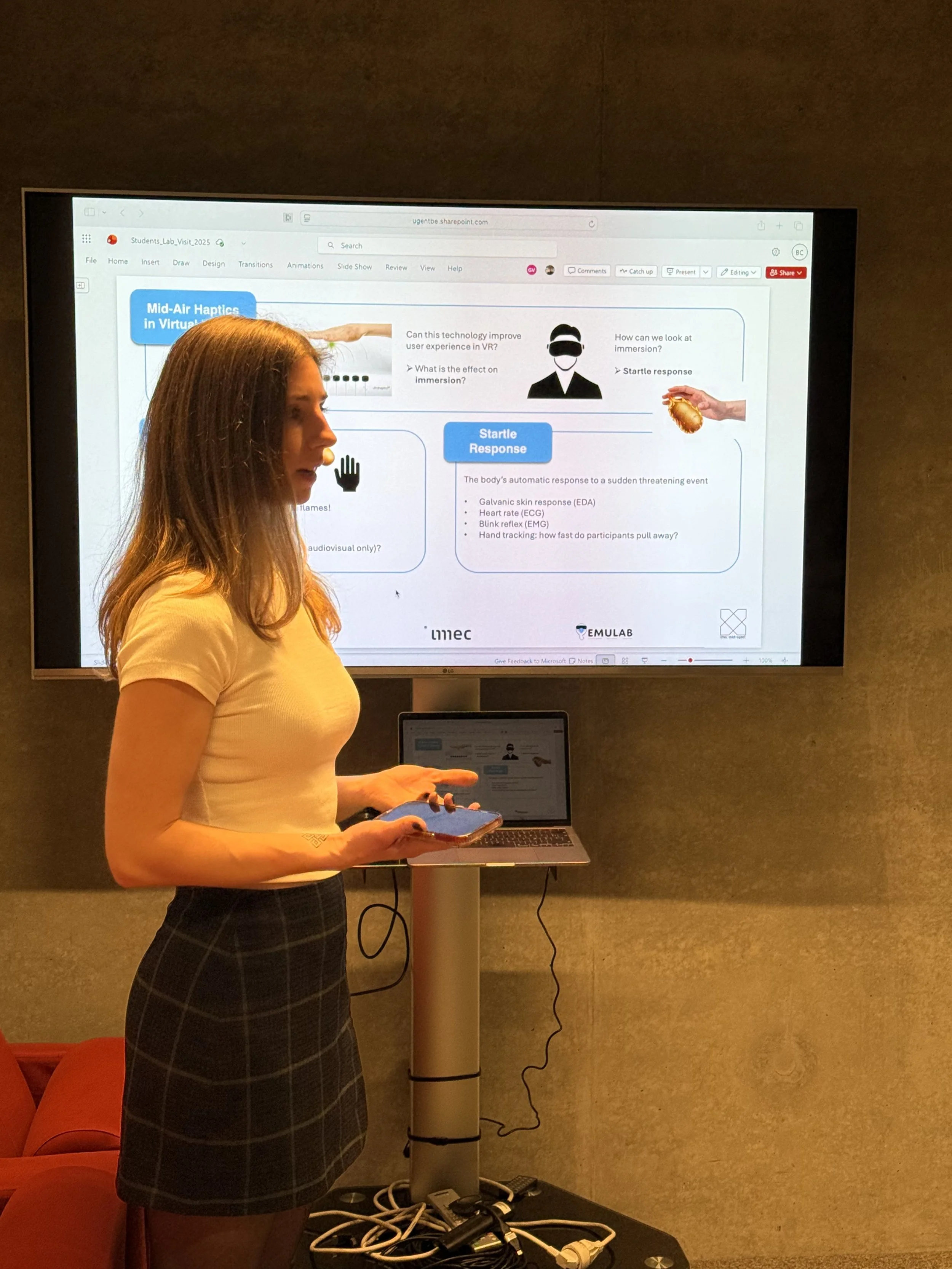
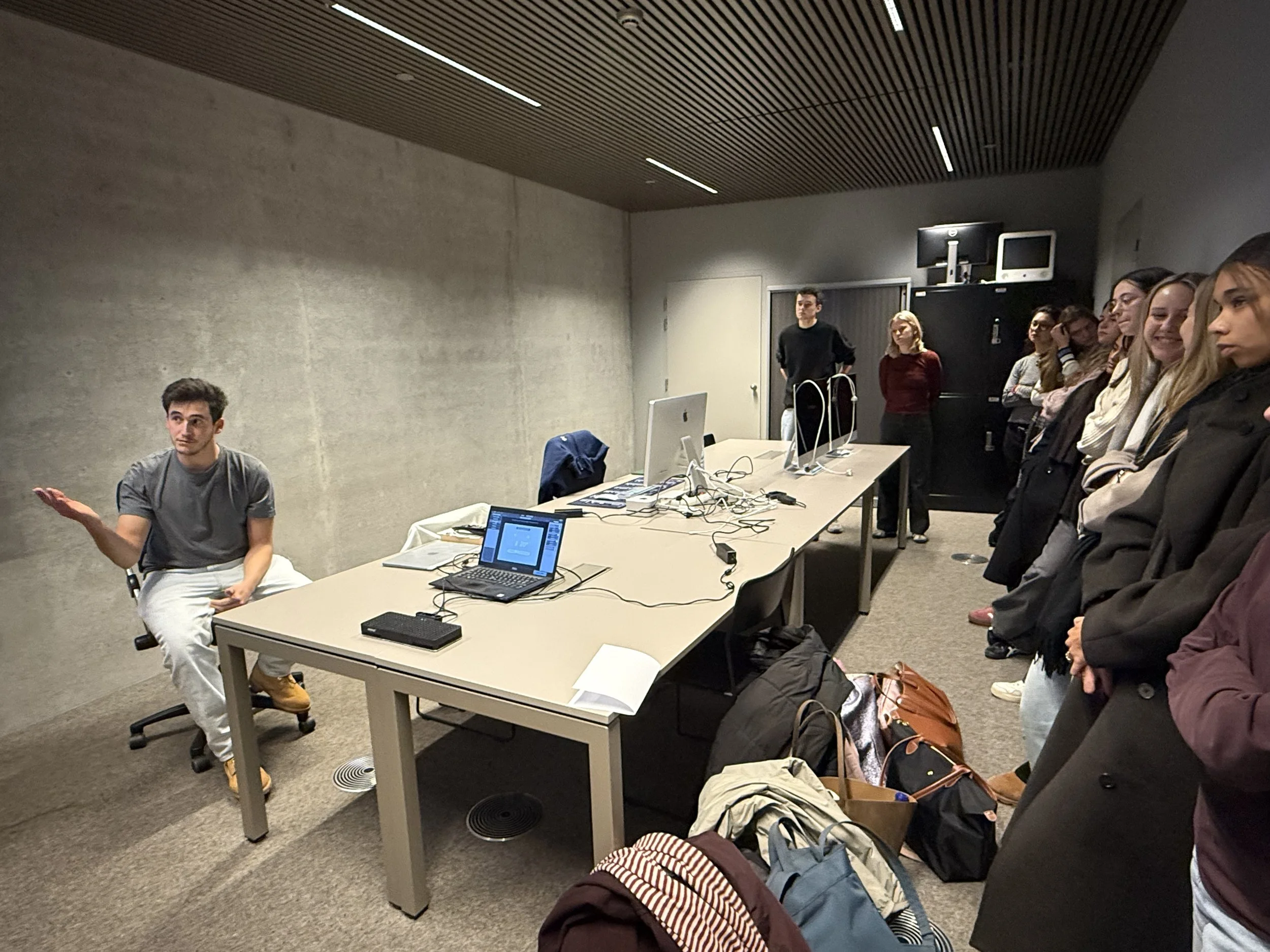
Quinn and Birgit showed how mid-air haptics (touch without physical contact using ultrasonic waves) can increase immersion in VR compared to no haptics.
In their “hot potato experiment”, they measure whether participants show stronger startle responses (EDA, heart rate, blink reflex, hand withdrawal) when virtual potatoes suddenly catch fire, compared to standard audiovisual VR.
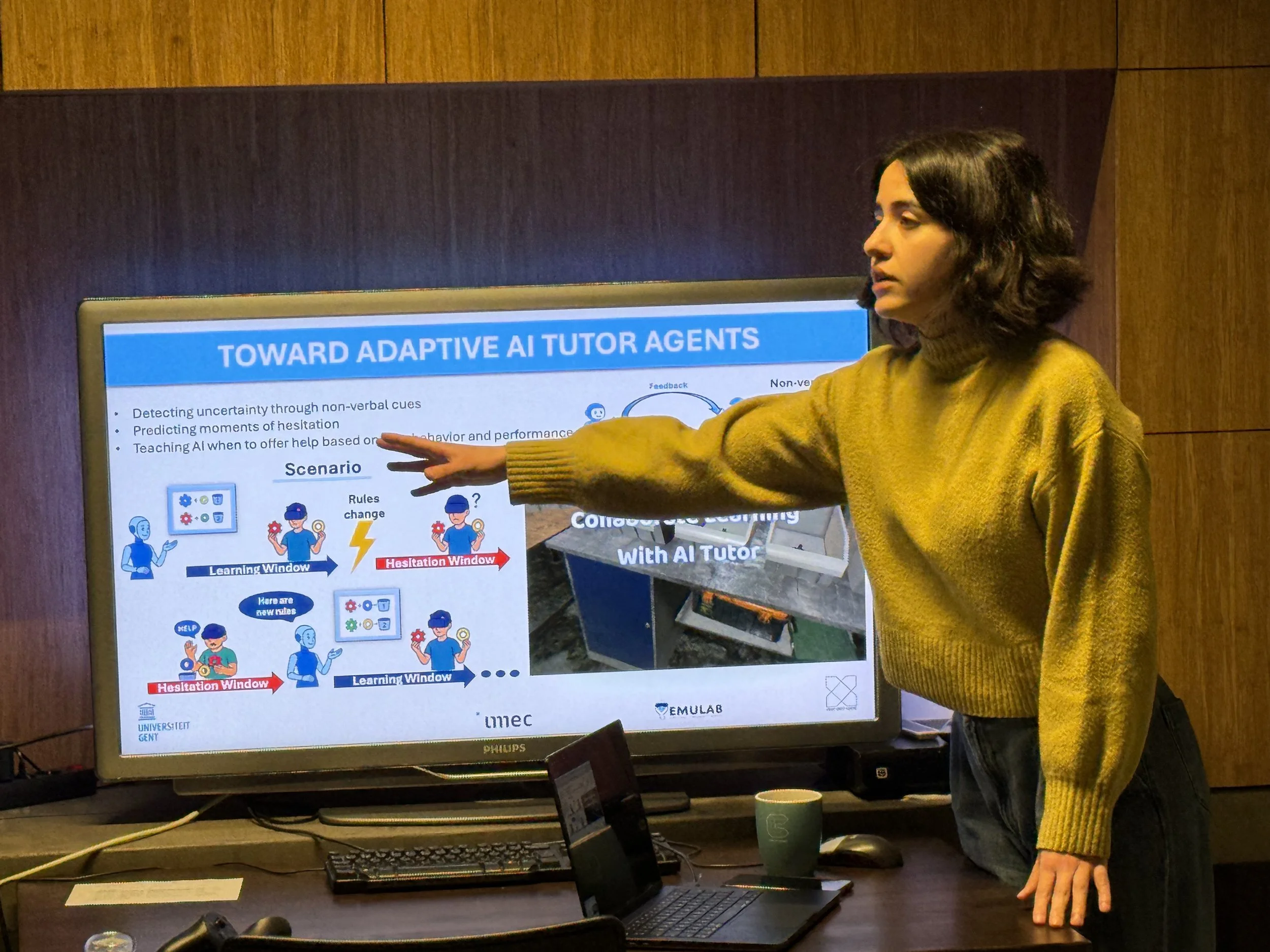
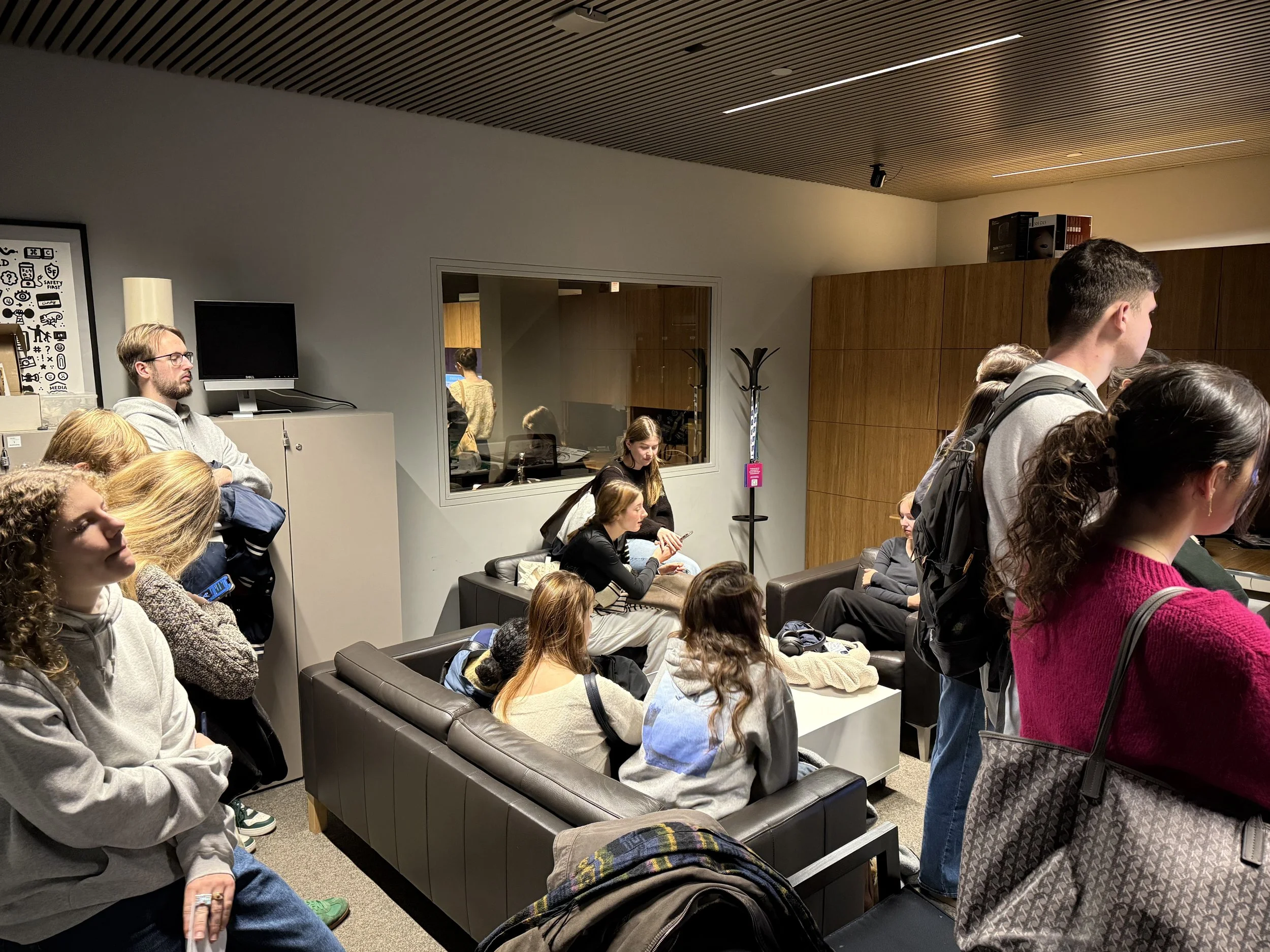
Sepideh introduced the task-hesitation study, which explores how learners’ non-verbal cues reveal moments of hesitation and how an AI tutor might use this information to improve learning.
In this study, participants perform a memorization-based assembly task while their non-verbal behavior is recorded, allowing to analyze help-seeking moments and investigate whether these moments can be predicted before the learner verbally asks for help.
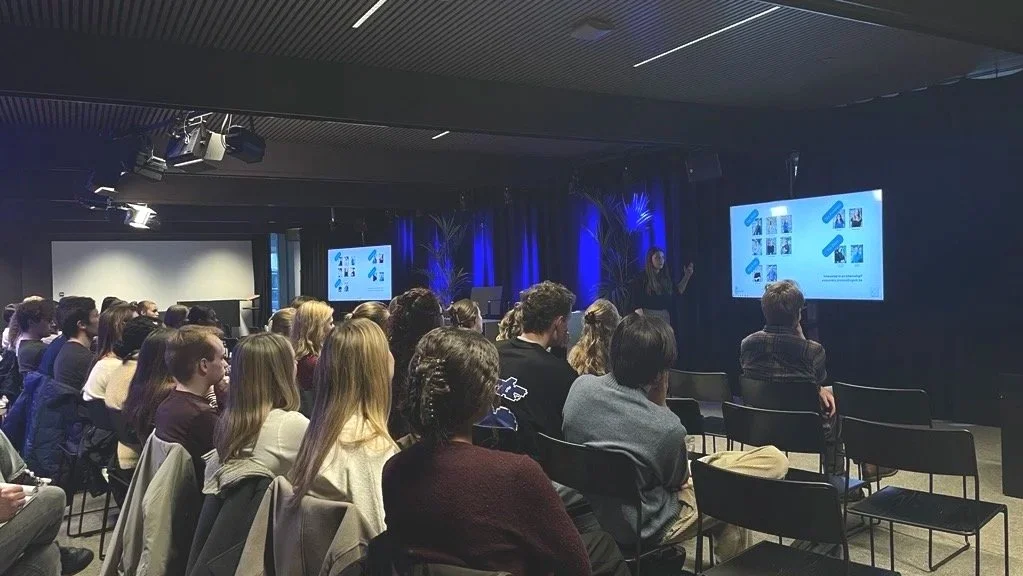
By exploring our different research booths, students were able to discover the variety of work taking place in the EmuLab and connect with our ongoing studies. We appreciated their engagement and interest throughout the afternoon, and we hope the visit offered useful insights!